Available 24/7 (214) 333-3333
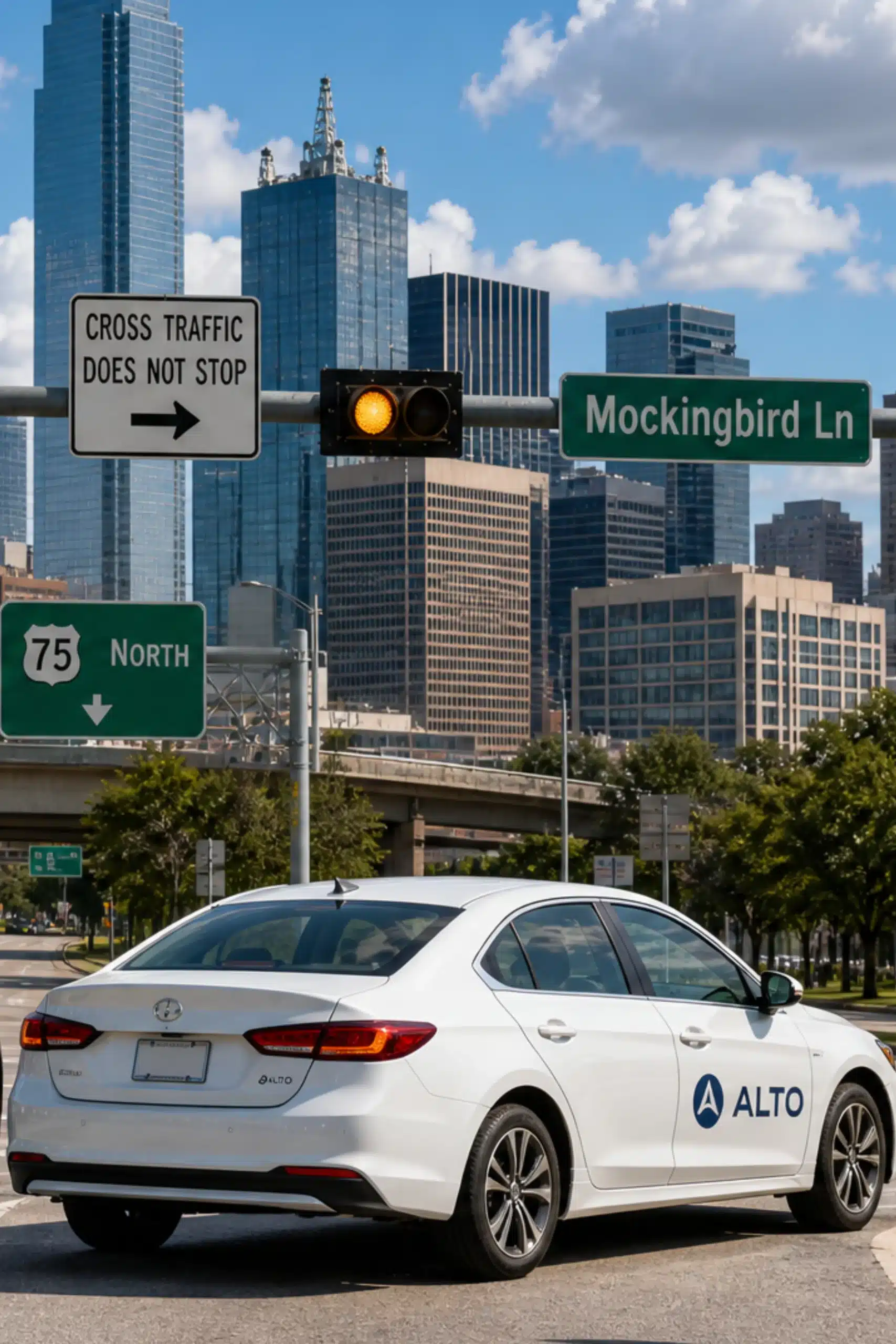
An Alto accident can leave you facing serious injuries, medical bills, lost income, and a lot of uncertainty about what comes next. One moment you are heading to the airport, traveling through Uptown, or returning home from Deep Ellum. Next, you are dealing with the aftermath of a crash and trying to understand who should be held responsible.
Unlike Uber and Lyft, Alto operates under a different business model. Alto hires its drivers as employees and owns the vehicles in its fleet. That distinction can make a significant difference in an injury claim. In many cases, Alto may be directly responsible for the actions of its drivers while they are working, creating a more direct path to corporate accountability than is often seen in other rideshare accident cases.
At Frenkel & Frenkel, our Dallas rideshare accident lawyers understand how to investigate corporate transportation companies and pursue claims against the insurers that stand behind them. We know how to gather critical evidence, identify all available sources of compensation, and fight for injured clients when companies refuse to accept responsibility. Our firm prepares every case as if it will go to trial because insurance companies know which law firms are willing to go to court and which are not.
If you or a loved one was injured in an Alto accident in Dallas, contact us for a free consultation. We handle Alto accident claims on a contingency fee basis, meaning you pay nothing unless we recover compensation for you.
NO FEES UNLESS WE WIN*

1,300+ Five-Star Reviews
$1B+
RECOVERED
30+
DECADES OF COMBINED LEGAL EXPERIENCE
90+
DECADES OF COMBINED LEGAL EXPERIENCE
FREE
CONSULTATION
KEY TAKEAWAYS
Quick Answer
Can I sue Alto directly after a rideshare accident in Dallas?
Yes — and Alto's at fault structure makes it easier. Unlike Uber or Lyft, Alto employs its drivers as W-2 employees, meaning the company may be held directly at fault under respondeat superior when their driver causes a crash. You don't need to fight over independent contractor defenses. Frenkel & Frenkel knows how to leverage this corporate accountability — we investigate immediately, secure critical evidence, and hold Alto responsible so you can focus on recovery. You pay nothing unless we win.
Call (214) 333-3333 — Free Consultation"*" indicates required fields
Get medical care right away, even if your injuries seem minor. Call 911. Take photos of the scene. Save your Alto app trip details before they disappear. Do not give a recorded statement to Alto’s insurance company before you talk with a lawyer. Because Alto employs its drivers and owns its vehicles, the company may be directly liable under Texas law. A Dallas personal injury attorney can preserve evidence, find every liable party, deal with the insurer, and seek payment for medical bills, lost wages, pain and suffering, and other losses. Contact Frenkel & Frenkel for a free consultation.
Alto’s Employment Model Creates Stronger Corporate Liability
Most rideshare crash claims involve a hard first step. Uber and Lyft spend a lot of money arguing that their drivers are independent contractors, not employees. That argument is meant to reduce company responsibility. It often pushes victims toward harder claims like negligent hiring or negligent supervision.
Alto’s model removes that barrier. The company chose to hire drivers as W-2 employees. Under Texas law, an employer is responsible for the careless acts of an employee done within the course and scope of work. This rule is called respondeat superior. You do not need a creative legal theory. You need to show the driver was careless and on the job. With Alto, those facts are built into the company’s own model.
Company-Owned Vehicles Add Another Layer of Responsibility
Uber and Lyft drivers use their own cars. That can create disputes about who owns the car, what insurance applies, and whether a policy excludes business use. Alto owns its entire fleet of branded luxury SUVs. As the vehicle owner, Alto has a duty to make sure each car is safe, inspected, and maintained.
If a mechanical problem, maintenance issue, or vehicle defect helped cause your crash, Alto may be responsible. There is no separate owner to track down. There is no personal insurance exclusion to work around. The company, the driver, and the vehicle sit under one corporate umbrella.
In a standard Uber or Lyft crash, your lawyer must sort through several layers of coverage: the driver’s personal auto policy, the rideshare company’s contingent policy, and the company’s commercial policy. Which one applies depends on whether the app was on, whether a ride was accepted, and whether a passenger was already in the car. Insurers argue about those details often.
Alto works differently. Because the company employs its drivers and owns its vehicles, it carries a commercial fleet policy that covers on-duty operations. There is usually no coverage gap to exploit. There is usually no real question about which policy applies. You deal with one insurer for one corporate defendant.
When you bring an Alto claim, your attorney can often use several legal theories at the same time, all against the same company. These may include vicarious at fault under respondeat superior, direct negligence by the company, negligent hiring, negligent supervision, negligent entrustment, and negligent maintenance. Each theory can help strengthen the claim and the settlement position.
These theories can also open the door to useful corporate records. That can include the driver’s employment file, training records, performance reviews, vehicle maintenance logs, GPS and telematics data, and footage from in-vehicle security cameras.
It depends on who caused the crash. If the Alto driver was at fault, you can pursue Alto directly under respondeat superior as the employer and vehicle owner. If another driver caused the crash while you were riding in an Alto vehicle, that driver and their insurer are the main targets. Alto may also carry uninsured and underinsured motorist coverage that could help if the at-fault driver does not have enough insurance. Your own UM or UIM coverage may also apply. Speaking with a lawyer early gives you a clearer view of fault and available coverage.
Quick Answer
Can I recover more compensation if multiple parties caused my Alto rideshare accident?
Potentially yes. Each at-fault party may carry their own insurance policy. Identifying multiple defendants — such as Alto, other drivers, vehicle manufacturers, and maintenance providers — can open up multiple sources of recovery that a single-defendant case would not. This is one of the most important reasons to hire an attorney who investigates the full picture, not just the driver.
Preserve as much as you can as quickly as you can. Take photos of the vehicles, your injuries, the road, and any visible damage. Screenshot your trip details from the Alto app. Include the driver’s name, the vehicle, and the route. Get names and contact information for witnesses. Keep all medical records, bills, and receipts from the first moment you seek care.
Because Alto employs its drivers and runs its own fleet, more company evidence may be available through discovery. That can include the driver’s employment history, in-vehicle camera footage, GPS and speed data, shift records, maintenance logs, and prior safety complaints. This evidence can disappear if it is not requested fast enough. A lawyer can send a litigation hold letter to Alto and demand that key records be saved before they are overwritten or destroyed.
Our attorneys have spent decades fighting for people hurt in rideshare accidents. We have the knowledge and resources to take on even the most complex cases against rideshare companies like Alto, Uber, and Lyft.
Our founding attorneys used to defend insurance companies. Now, they use that inside knowledge to fight for injured people like you. We know the tactics companies use, and we know how to counter them.
We have recovered over $1 Billion in settlements and verdicts for our clients. For 16 straight years, our attorneys have been named among the Best Lawyers in Dallas.
Texas law gives you two years from the date of the crash to file a personal injury lawsuit. This deadline comes from Texas Civil Practice and Remedies Code Section 16.003. If you miss it, you will likely lose the right to recover compensation. The same two-year deadline applies to wrongful death claims, and it starts on the date of death. If the injured person is a minor, the clock usually pauses until the child turns 18. Even so, waiting is risky. Camera footage, GPS data, and app records can be deleted or overwritten. Witnesses forget details. Employment and maintenance records need to be preserved through a formal hold. The sooner you speak with a lawyer, the better your chance of getting the full evidence picture.
Settlement - Catastrophic Injury Case
Verdict - Commercial Vehicle Collision
Settlement - Trucking Accident Case
Settlement - Serious Motor Vehicle Wreck
Driver-Related Causes
Operational and Vehicle Hazards
External Causes
If you were riding in an Alto vehicle when the crash happened, you have a direct path to compensation. Alto, as both the employer and the vehicle owner, can be held responsible for driver negligence under Texas respondeat superior law. You do not need to prove extra company wrongdoing. Your lawyer can also look at negligent maintenance if a vehicle defect helped cause the crash. Common passenger injuries include whiplash, neck injuries, herniated discs, traumatic brain injuries, broken bones, internal injuries, and post-traumatic stress disorder.
Pedestrians and cyclists struck by Alto vehicles may bring claims against the company as both employer and vehicle owner. Crashes near Love Field, in Deep Ellum, or along busy Dallas corridors can be serious. Even if you were in a crosswalk or bike lane, an Alto driver's distraction, speeding, or failure to yield may support a claim. Because Alto uses company drivers and company vehicles, it cannot shift the blame to an independent contractor.
If you were driving your own car and an Alto vehicle hit you, you can pursue a claim against Alto under respondeat superior. Because Alto employs the driver and owns the vehicle, you are dealing with one insured corporate defendant rather than an individual driver's personal auto policy. That can mean higher coverage and a simpler at fault analysis. If the Alto driver was on shift, course and scope of employment is usually not in dispute.
If a family member was killed in a crash involving an Alto vehicle, the estate and eligible family members may file a wrongful death claim in Texas. The same employer at fault rules apply. The two-year statute of limitations for wrongful death starts on the date of death. These are serious and complex cases, so it helps to have an experienced Dallas personal injury lawyer from the start.
The main difference is driver status. Uber and Lyft call their drivers independent contractors and use that status to argue they are not liable for driver negligence. Alto hires its drivers as W-2 employees. Under Texas respondeat superior law, that makes Alto directly and vicariously at fault for a driver's negligence while the driver is on duty. You do not have to fight the independent contractor defense. Alto also owns its vehicles, which creates owner at fault that does not exist in a standard Uber or Lyft case.
Alto is usually the main defendant because it employs the driver and owns the vehicle. The Alto driver may also be personally at fault.. If another driver caused or helped cause the crash, that driver and their insurer may also be responsible. If a vehicle defect played a role, the manufacturer may share fault. Your lawyer can review all of the facts and pursue every available source of recovery.
Depending on your case, you may be able to recover medical expenses, future medical costs, lost wages, and lost earning ability, along with pain and suffering, mental anguish, physical impairment, and loss of enjoyment of life. In rare cases, punitive damages may also be available. Texas' modified comparative fault rule allows recovery as long as you are not more than 50 percent at fault, but your award is reduced by your share of fault.
Not before you speak with a lawyer. Alto's insurer has adjusters whose job is to protect the company's money, not yours. They may call soon after the crash, ask for a recorded statement, or offer a fast settlement that does not cover your full losses. Politely refuse the recorded statement and contact a personal injury attorney first. Once you have a lawyer, the insurer should speak through that lawyer.
At Frenkel & Frenkel, the first consultation is free, and Alto rideshare accident claims are handled on a contingency fee basis. You pay nothing up front and owe no attorney fee unless we recover compensation for you. Our fee is a share of the recovery, so our interests stay aligned with yours from the start.
Yes. Alto has an exclusive five-year contract for curbside passenger pickup at Dallas Love Field Airport. If your crash happened during an airport pickup or dropoff, Alto's driver was likely on duty and within the scope of employment, which supports employer liability. The heavy Alto traffic around Love Field and the nearby I-35E corridor also means crashes in that area are common. A lawyer who knows Dallas traffic patterns can help.
Texas follows a modified comparative fault rule under Texas Civil Practice and Remedies Code Section 33.001. If you were partly at fault, your compensation is reduced by your share of fault. For example, if you were 20 percent at fault, you could recover 80 percent of your damages. If you are more than 50 percent at fault, Texas law bars recovery. Insurance companies often try to blame the injured person, so it helps to have a lawyer push back.