Available 24/7 (214) 333-3333
A tractor-trailer crash creates a legal web that most victims are not prepared to untangle. One moment you were heading somewhere on your normal routine, maybe on I-35W near AllianceTexas, through the Mixmaster, or on I-30 heading into Fort Worth. The next, you are dealing with serious injuries, mounting medical bills, and real uncertainty about what comes next.
Tractor-trailer accidents are legally distinct because the tractor and the trailer are often owned, insured, and maintained by separate companies. Determining who is at fault, whether it is the driver, the owner of the cab, the company that loaded the trailer, or a maintenance provider, requires a thorough investigation. Our Fort Worth tractor-trailer accident attorneys specialize in navigating these multi-party fault claims and federal DOT regulations.
If a tractor-trailer caused your injuries in Fort Worth, we may be able to help you hold every responsible party accountable for your medical bills, lost income, and other damages.
NO FEES UNLESS WE WIN

1,300+ Five-Star Reviews
$1B+
RECOVERED
30+
DECADES OF COMBINED LEGAL EXPERIENCE
90+
DECADES OF COMBINED LEGAL EXPERIENCE
FREE
CONSULTATION
KEY TAKEAWAYS
Quick Answer
Why are tractor-trailer accident cases more complex than regular truck accidents?
A tractor-trailer involves two separate units, the tractor and the trailer, which are often owned, insured, and maintained by completely different companies. That means multiple parties may share fault in a single crash: the driver, the trucking company, the cargo loader, and equipment manufacturers, among others. Federal FMCSA regulations govern each of those parties differently, adding another layer of complexity. You need an attorney who investigates all of it, not just the driver. Frenkel & Frenkel handles every angle of multi-party tractor-trailer claims in Fort Worth at no cost unless we win.
Call (817) 333-3333 — Free Consultation"*" indicates required fields
Tractor-trailer accidents involve specific risks that do not apply to standard delivery trucks or pickup trucks. A tractor-trailer is made up of two parts: the tractor (the cab with the engine) and the trailer (the cargo box). These two pieces connect at a single point called the fifth wheel coupling.
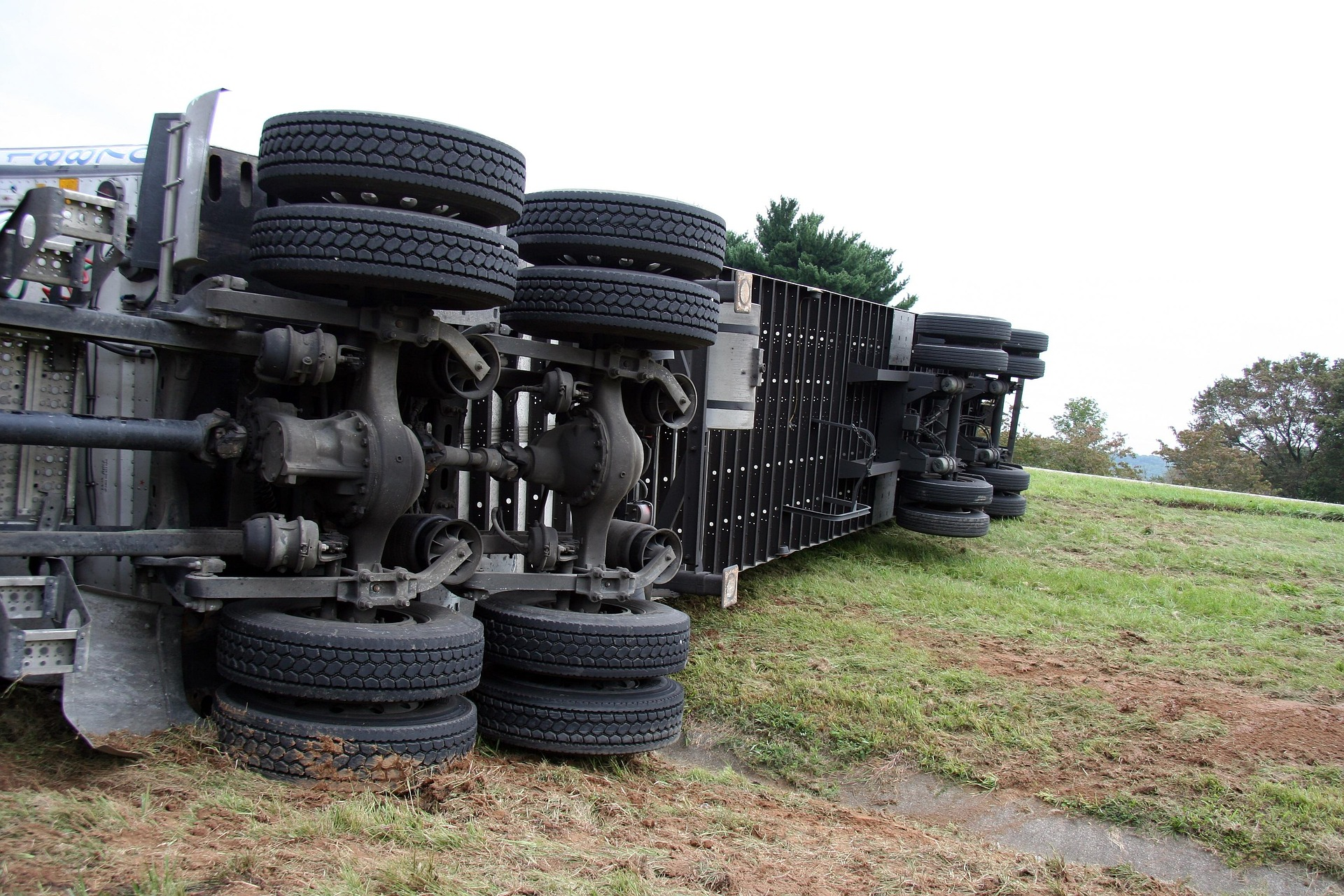
When this connection fails or when the driver makes a mistake, the results can be catastrophic. The trailer can detach, swing out in a jackknife, or cause the entire rig to roll over. Tractor-trailers can weigh up to 80,000 pounds when fully loaded. The sheer size and weight make crashes far more severe than typical car accidents.
These cases also require knowledge of federal coupling regulations, trailer configurations, and specialized equipment inspections. You need an attorney who understands the unique dangers of tractor-trailer accidents.
Your safety comes first. If you are injured, call 911 right away. Do not try to move if you have a serious injury. Wait for paramedics to arrive.
If you are able, move to a safe area away from traffic. Call the police and make sure they file an official accident report. Take photos of the vehicles, the trailer, the coupling mechanism, any visible injuries, and the truck DOT number and company name. Exchange insurance and contact information with the driver, but do not discuss who was at fault.
See a doctor as soon as possible, even if you feel okay. Some serious injuries, like internal bleeding or spinal damage, may not show symptoms immediately. Then contact a tractor-trailer accident attorney right away. Evidence can disappear fast. Trucking companies often send investigators to the scene within hours to protect their interests.
The fifth wheel is the large circular plate mounted on the back of the tractor. It connects to a pin on the trailer called the kingpin. This connection allows the trailer to pivot when the truck turns. If the fifth wheel is worn, damaged, or not properly locked, the trailer can detach while the truck is moving.
Federal regulations require the fifth wheel to be securely mounted and properly maintained. The locking mechanism must work correctly. Drivers are supposed to inspect the coupling before each trip. When companies or drivers skip these inspections, the results can be deadly.
Trailer detachment accidents cause some of the worst injuries we see. A loose trailer can swing across lanes, roll over, or crash into other vehicles. If you were hurt in a crash where the trailer came loose, the trucking company may be responsible.
Most modern commercial trucks have an Electronic Control Module (ECM), often called a “black box.” This device records data about the truck operation in the moments before and during a crash. It can show the truck speed, braking patterns, RPMs, and whether the driver was following Hours of Service regulations.
This data is often unbiased proof of what really happened. It can show if the driver was speeding, failed to brake in time, or was driving while fatigued. But trucking companies can overwrite or erase this data if it is not preserved quickly.
A lawyer can send a spoliation letter to the trucking company demanding they preserve all evidence, including black box data, driver logs, and maintenance records. Acting fast is critical to protecting this evidence.
Every case is different. Some settle in a few months. Others may take a year or more, depending on how many parties are involved, how serious the injuries are, whether liability is clearly established, and whether expert reconstruction or analysis is needed.
Our Fort Worth tractor-trailer accident attorneys work to move your case forward as efficiently as possible. At the same time, we will not rush into a settlement that undervalues your injuries or leaves compensation on the table. We keep you informed at every step so you always know where things stand and what to expect next.
Quick Answer
What evidence can disappear after a Fort Worth tractor-trailer accident, and how do we stop it?
Trucking companies send their own investigators to the crash scene within hours of a serious accident. Without a formal spoliation letter from an attorney, key evidence can be erased, overwritten, or destroyed. We move immediately to preserve:
Call us immediately. Every hour matters.
Call Now — (817) 333-3333
Under Texas Civil Practice and Remedies Code Section 16.003, you generally have two years from the date of the accident to file a personal injury lawsuit. Missing that deadline typically ends your right to seek compensation, even if the case is otherwise strong. Limited exceptions apply: if the injured person is a minor, the deadline may be tolled until they turn 18; if a government-owned or operated vehicle was involved, such as a transit bus, the deadline to file a formal notice of claim may be as short as six months. Contact a Fort Worth tractor-trailer accident attorney as soon as possible to make sure no deadlines are missed.
Our attorneys have spent decades fighting for people hurt in tractor-trailer accidents. We have the knowledge and resources to take on even the most complex cases.
Our founding attorneys used to defend insurance companies. Now, they use that inside knowledge to fight for injured people like you. We know the tactics companies use, and we know how to counter them.
We have recovered over $1 Billion in settlements and verdicts for our clients.** For 16 straight years, our attorneys have been named among the Best Lawyers in Fort Worth.
Settlement - Catastrophic Injury Case
Verdict - Commercial Vehicle Collision
Settlement - Trucking Accident Case
Settlement - Serious Motor Vehicle Wreck
Driver Fatigue and Hours of Service Violations
Trucking companies often pressure drivers to meet tight deadlines, pushing them to drive while exhausted. Federal law limits how long drivers can be on the road, but violations are common. Fatigued driving slows reaction time and impairs judgment just like drunk driving. Hours of Service violations are strong evidence of negligence.
Coupling Failures and Fifth Wheel Defects
When the fifth wheel connection is worn, improperly latched, or poorly maintained, the trailer can detach from the tractor. This can happen suddenly at highway speeds. Loose trailers can swing across multiple lanes, roll over, or crash into other vehicles. Companies that skip coupling inspections may be at fault for these crashes.
Trailer Swing and Jackknife Accidents
A jackknife happens when the trailer swings out to form a 90-degree angle with the tractor. This is often caused by sudden braking, slick roads, speeding, or improperly loaded cargo. The swinging trailer can sweep across multiple lanes and cause multi-vehicle pileups.
Improper Loading and Cargo Shifts
Cargo that is not properly loaded or secured can shift during transit, causing a tractor-trailer to become unbalanced. This can lead to rollovers, jackknife accidents, or lost loads that create hazards for other drivers. The company that loaded the trailer may share fault for these crashes.
Brake Failures and Poor Maintenance
Trucking companies are required to inspect and maintain their vehicles regularly. Worn brakes, bald tires, faulty lights, and broken steering parts can cause or worsen accidents. When companies cut corners on maintenance to save money, people get hurt.
Speeding and Aggressive Driving
An 80,000-pound tractor-trailer needs 20% to 40% more stopping distance than a passenger car. Speeding drastically increases stopping distance and the force of impact. Aggressive driving behaviors like tailgating, unsafe lane changes, and road rage make crashes even more likely and more severe.
When the coupling between the tractor and trailer fails, the trailer can break free and become an uncontrolled hazard on the road. Trailer detachments are typically caused by worn fifth wheel components, improper latching, or a failure to perform required coupling inspections. A loose trailer at highway speed puts every nearby driver in immediate danger.
A jackknife occurs when the trailer swings out to a 90-degree angle from the cab, often sweeping across several lanes of traffic at once. These crashes are commonly caused by sudden braking, slippery or icy roads, speeding, or improperly loaded cargo, and are particularly dangerous on high-traffic corridors like I-35W and I-30 through Fort Worth.
An underride crash happens when a smaller vehicle slides underneath the side or rear of a tractor-trailer, often shearing off the top of the car and causing fatal injuries. An override occurs when a truck rolls over a smaller vehicle. These are among the deadliest crash types on the road. Federal underride guard requirements exist but are not always properly maintained.
Tractor-trailers can roll over because of sharp turns at high speed, shifting or unsecured cargo, tire blowouts, or driver error. Rollovers can block entire roadways and cause chain-reaction crashes involving multiple vehicles. The tight curves on Loop 820 and the complex interchanges near the Mixmaster are among the Fort Worth locations where these crashes have occurred.
To complete a right turn, tractor-trailer drivers must often swing wide to the left first. Drivers who try to pass on the right can be squeezed between the truck and the curb or a barrier. These accidents are common in urban areas and at busy Fort Worth intersections, particularly in commercial corridors and near freight delivery zones.
Tractor-trailers have significant blind spots on all four sides, commonly called no-zones. Crashes happen when a truck driver changes lanes or turns without detecting a nearby vehicle in one of those zones. Because of the sheer size of these blind spots, every driver sharing the road with a tractor-trailer is at risk if the truck driver fails to check properly before maneuvering.
Quick Answer
Are there exceptions to Texas two-year filing deadline for tractor-trailer accidents?
Yes, but the exceptions are narrow. The standard deadline under Texas Civil Practice and Remedies Code Section 16.003 is two years from the date of the accident. Limited exceptions may apply in the following situations:
This is general legal information, not legal advice. Contact a Fort Worth tractor-trailer accident attorney to discuss the specific facts of your case.
Don't Wait — Call (817) 333-3333A tractor-trailer consists of two separate units, the tractor (the cab) and the trailer (the cargo unit), which together can weigh up to 80,000 pounds when fully loaded. That size creates far longer stopping distances and far more severe injuries in a crash. These cases are also governed by federal FMCSA regulations, may involve multiple parties sharing fault, and typically carry much larger insurance policies than a standard car accident or delivery truck case.
More than one party may share responsibility. This can include the truck driver for direct negligence, the trucking company for negligent hiring or poor maintenance, the cargo loading company if freight was improperly secured or overloaded, a maintenance provider if negligent repairs contributed to mechanical failure, and a manufacturer if a defective coupling or other component caused or worsened the crash. We investigate every case to identify every potentially liable party and every insurance policy that may apply.
The most common violations we encounter include hours-of-service violations (fatigued driving), skipped pre-trip inspections, improper cargo securement, and drug or alcohol use. Trucking companies sometimes pressure drivers to cut corners to meet delivery deadlines, particularly on high-volume freight corridors like I-35W in Fort Worth. When those shortcuts cause a crash, both the driver and the company may be held responsible. We review driver logs, ELD records, inspection reports, and company safety policies to identify every applicable violation.
Move to safety first, then call 911 for medical assistance. If you are able to do so safely, photograph all vehicles involved, the trailer, the coupling mechanism, the truck's DOT number and company name, and any visible injuries. Exchange contact and insurance information with the truck driver, but do not discuss fault. See a doctor as soon as possible, even if you feel okay. Serious injuries, including internal trauma and traumatic brain injury, may not show clear symptoms right away. Contact a Fort Worth tractor-trailer accident attorney immediately so evidence preservation can begin before critical data is lost or overwritten.
Under Texas Civil Practice and Remedies Code Section 16.003, you generally have two years from the date of the crash to file a personal injury lawsuit. Missing that deadline typically ends your right to seek compensation, even if your case would otherwise be strong. If a government-owned vehicle was involved, such as a city or county vehicle, the deadline to file a formal notice of claim may be as short as six months. Contact a Fort Worth tractor-trailer accident attorney as soon as possible to protect your rights and make sure no deadlines are missed.
Most modern tractor-trailers carry an electronic data recorder, commonly called a black box or ECM (electronic control module). This device records the truck's speed, braking activity, engine status, and hours of operation in the moments before and during a crash. That data can be decisive evidence for establishing what the driver was doing and who bears fault. It can also be overwritten within 30 days if the trucking company is not formally notified to preserve it. An attorney can send a litigation hold letter to the carrier immediately after the crash to prevent that from happening.
Common trailer types involved in Fort Worth crashes include dry vans (enclosed box trailers for general freight), flatbeds (open trailers for oversized cargo that must be secured with straps and chains), and tankers (liquid cargo that can shift or slosh and cause instability at highway speed). Each configuration carries its own risks. Improperly loaded flatbeds, unstable or overfilled tankers, and poorly maintained dry vans can all contribute to serious crashes on routes like I-35W and I-30.
Tractor-trailer cases involve layers of complexity that standard car accident claims do not. They are governed by federal FMCSA regulations and Texas state trucking rules. They often implicate multiple parties, each with their own insurance policy and level of liability. The tractor and trailer may be owned and insured by completely different companies, which adds another dimension to the investigation. Trucking companies frequently deploy rapid-response investigators to the scene within hours to manage evidence and protect the company's position. Critical electronic evidence, including black box data and ELD records, can be overwritten within 30 days if not secured through a formal litigation hold. An experienced Fort Worth tractor-trailer accident attorney can act immediately to preserve that evidence.
Not before speaking with an attorney. Insurance adjusters work for the trucking company's carrier, and their goal is to limit what the company pays out. They may reach out quickly after the crash and ask for a recorded statement or request that you sign documents. Both can be used to reduce or deny your claim. Politely decline until you have spoken with a Fort Worth tractor-trailer accident attorney. Once you have legal representation, all insurer communications go through your attorney.
Depending on the facts of your case, you may be able to recover economic damages including past and future medical bills, lost wages, and loss of future earning capacity, as well as property damage. You may also recover non-economic damages for pain and suffering, mental anguish, physical impairment, disfigurement, and loss of enjoyment of life. In cases involving extreme recklessness or gross negligence, Texas law may also allow exemplary, or punitive, damages. Because tractor-trailers carry significantly higher insurance limits than passenger vehicles, the potential recovery in these cases is often substantially greater.