

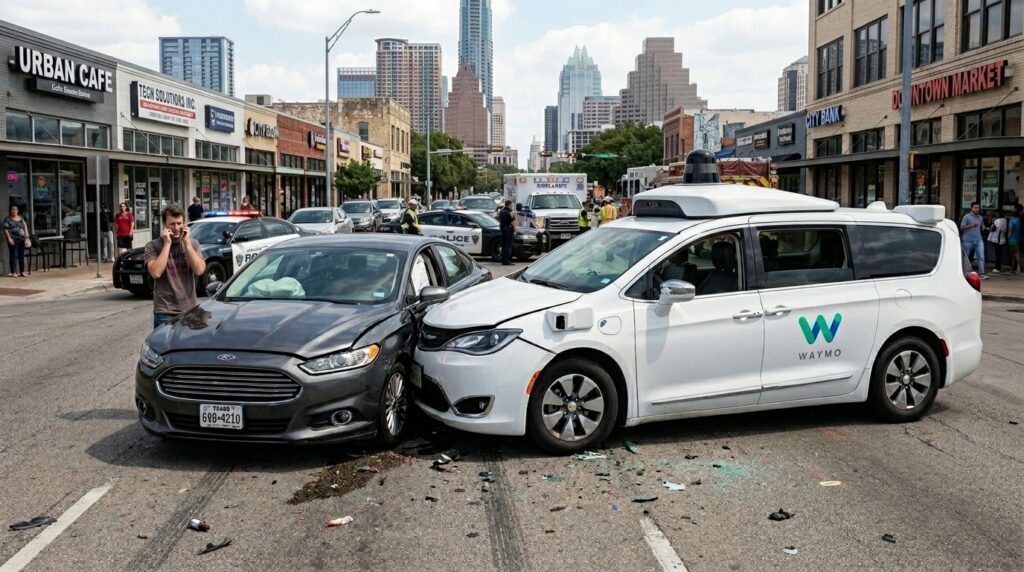
Self-driving vehicle technology is no longer something you only hear about in the future. It is already part of the conversation on Texas roads, including routes connected to Dallas. From driverless freight activity between Houston and Dallas to increasingly advanced vehicle technology in passenger cars, many people are asking the same question: if a self-driving car causes a crash, who is responsible?
That question matters if you were hurt in Dallas traffic, on I-35E, I-45, I-635, the Dallas North Tollway, or another busy local roadway. In a regular crash, you usually look at the driver who caused the wreck. In a self-driving car accident, fault may involve several parties, including the vehicle owner, the company behind the driving system, or another business connected to the vehicle’s operation.
At Frenkel and Frenkel, we know how confusing these cases can feel. When technology is involved, insurance companies may try to shift blame, delay answers, or argue that the system, not a person, made the decision. That does not mean no one can be held accountable. It means the case often needs a deeper investigation from the start.
Key Takeaways
– Self-driving car accident claims are often more complex than standard car accident cases.
– In Texas, liability may fall on the vehicle owner, a company involved in the automated driving system, or another responsible party.
– The facts of the crash matter, including whether the vehicle was fully autonomous or required human supervision.
– Electronic evidence can be critical and should be preserved quickly.
– If you are injured in a Dallas autonomous vehicle accident, early legal guidance can help protect your claim.
Are Self-Driving Cars Legal in Texas?
In general, yes. Texas allows autonomous vehicles on public roads if they meet legal and safety requirements. Texas has been viewed as a state open to this kind of technology, which means Dallas drivers may continue seeing more vehicles with advanced automation features on local roads and highways.
That said, not every self-driving vehicle works the same way. Some still require a human to stay alert and be ready to take over. Others are designed to operate with little or no direct human input in certain settings. That difference matters because fault may depend on how the vehicle was supposed to operate at the time of the crash.
For example, if a vehicle required a human to step in and the person failed to do so, that human may still share responsibility. If the automated system itself made an unsafe decision, the focus may shift to the company behind the software, the vehicle owner, or both.
Why Self-Driving Car Accident Cases Are Different
A self-driving car accident is not always handled like a typical two-car wreck. In a standard case, the issue is often whether one driver was speeding, distracted, or failed to yield. In an autonomous vehicle case, the questions are broader.
You may need to ask:
– Was the automated driving system engaged?
– Was the vehicle operating within its proper limits?
– Did the owner maintain the vehicle correctly?
– Did the system fail to recognize traffic, pedestrians, road markings, or hazards?
– Was there a software problem, sensor issue, or mechanical defect?
These cases may involve both negligence and product liability issues. That makes them more technical and often more expensive for injured people to fight without help.
Who May Be Liable After a Self-Driving Car Accident in Dallas?
The Vehicle Owner
The owner of the self-driving vehicle may be responsible in some situations. This can happen if the vehicle was not maintained properly, was used in unsafe conditions, or was operated outside the limits of its automated system.
For example, if the owner ignored warnings, skipped needed updates, or allowed the vehicle to be used in a way the system was not designed for, that could become part of the case.
The Human Driver or Occupant
Some vehicles are not fully autonomous. They still require a human to monitor the road and take control when needed. If the system alerted the person to step in and they failed to act, that person may be partly or fully at fault, depending on the facts.
This issue can be especially important in crashes involving advanced driver-assistance features that are sometimes mistaken for full self-driving capability.
The Company Behind the Driving System
If the automated system made a dangerous decision, the company that designed, built, tested, or deployed that system may be a key part of the case. This may involve a claim that the system was defective, failed to respond properly, or did not perform as it should have under normal road conditions.
In these cases, the legal theory may go beyond ordinary negligence. A product liability claim may be appropriate if the technology itself was unsafe.
The Vehicle Manufacturer
If a hardware problem contributed to the crash, the manufacturer may also be liable. This could involve faulty sensors, cameras, brakes, steering components, or another mechanical issue that made the crash more likely or made the injuries worse.
A Commercial Operator or Fleet Company
If the vehicle was part of a commercial fleet, there may be additional liability issues. A business operating autonomous vehicles may have responsibilities tied to maintenance, safety procedures, oversight, and compliance with Texas requirements. A company that cuts corners can create serious risks for everyone on the road.
What Evidence Matters in a Self-Driving Car Crash Case?
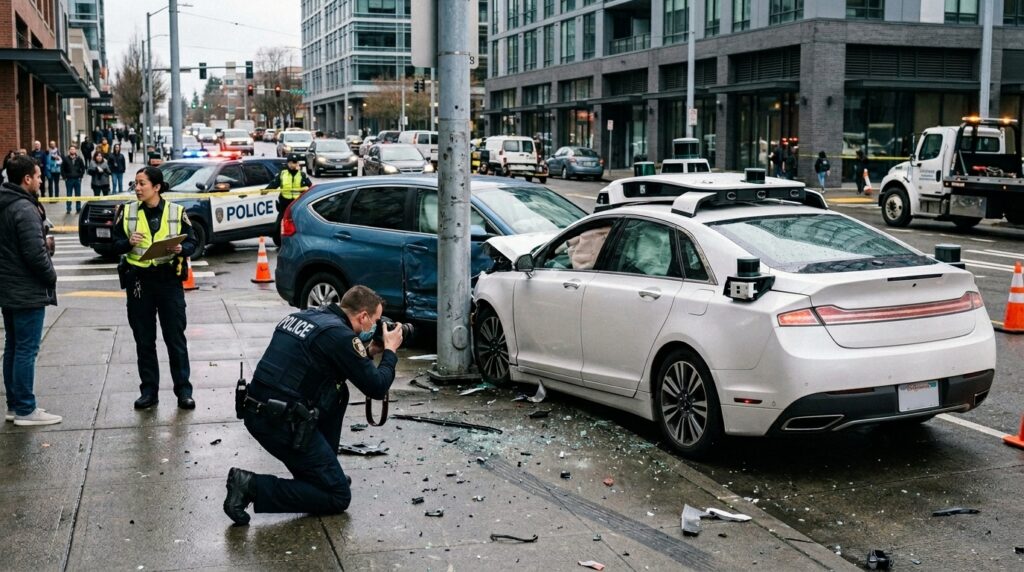
Evidence is critical in any injury claim, but it can be even more important in an autonomous vehicle case. These crashes often create digital evidence that does not exist in ordinary wrecks.
| Type of Evidence | Why It Matters in a Self-Driving Crash |
| Event Data Recorder (EDR) | Captures speed, braking, and steering inputs immediately before and during the crash. |
| System Logs & Data | Shows whether the automated driving system was engaged and what decisions it made. |
| Vehicle Camera Footage | Provides a visual record of the road, pedestrians, and traffic signals the vehicle detected. |
| Sensor & Telemetry Data | Shows what the vehicle’s LIDAR or radar “saw” and how it interpreted the environment. |
| Software & Update History | Identifies if the vehicle was running the latest safety patches or had known glitches. |
| Maintenance Records | Proves whether the owner or fleet company kept hardware in safe working order. |
| Police Reports | Provides an official third-party account and notes any technical malfunctions observed at the scene. |
Some of this evidence can disappear quickly if it is not preserved. That is one reason these cases should be taken seriously from day one. A delay can make it harder to show what the vehicle did, what the system saw, and whether someone had a chance to prevent the crash.
How Texas Law Can Affect a Self-Driving Car Accident Claim
Texas law can make fault disputes especially important. In personal injury cases, the other side may try to argue that you were partly to blame for what happened. That can reduce what you may recover, and in some cases it can prevent recovery altogether.
Insurance companies may say you changed lanes suddenly, were distracted, or failed to react in time. In a self-driving vehicle case, they may also try to point fingers between the human occupant, the owner, the technology company, and other parties.
That is why a strong investigation matters. In many Dallas accident claims, the first version of the story is not the full story. The company behind the vehicle may have more information than anyone else at the start. Getting access to the right evidence can make a major difference.
What to Do After a Self-Driving Car Accident in Dallas
If you are hurt in a crash involving a self-driving vehicle, the steps you take next can affect your health and your legal claim.
1. Call 911
Report the crash right away. A police report can help document what happened and identify the vehicles involved.
2. Get Medical Care
Even if you feel okay at first, get checked by a doctor as soon as possible. Some injuries do not show full symptoms right away.
3. Take Photos and Video
If you can do so safely, document the scene. Capture damage to the vehicles, road conditions, traffic signs, skid marks, visible injuries, company markings, and anything else that may help explain what happened.
4. Get Witness Information
Witnesses can be important in any accident case, especially when companies later dispute the facts.
5. Do Not Guess About Fault
Stick to the facts when speaking to police or insurers. Avoid making statements that could be taken as admitting blame.
6. Be Careful With Insurance Calls
Do not let an insurance adjuster pressure you into a recorded statement or quick settlement before you understand your injuries and your options.
7. Talk to a Personal Injury Lawyer
A Dallas personal injury lawyer can help preserve evidence, identify liable parties, and deal with the insurance companies while you focus on healing.
Why These Cases Need Immediate Attention
Autonomous vehicle cases can move fast behind the scenes. Companies may send investigators quickly. Electronic records may be stored internally. Insurance carriers may start building defenses before you have even had a follow-up medical visit.
If the crash involved a commercial autonomous vehicle, there may also be additional records, safety procedures, and operational issues that need to be reviewed early. Waiting too long can make important evidence harder to find.
How Frenkel and Frenkel Can Help
At Frenkel and Frenkel, we help injured people and families deal with serious accident claims in Dallas and throughout North Texas. A self-driving car accident claim can involve personal injury law, technical evidence, and complicated liability questions all at once. These are not cases where you want to assume the insurance company will sort everything out fairly.
We work to identify what happened, who may be responsible, and what evidence is needed to support your claim. If you were injured in an autonomous vehicle accident, you may be entitled to seek compensation for medical bills, lost income, pain and suffering, and other losses, depending on the facts of your case.
If you or a loved one has been hurt in a self-driving car accident in Dallas, contact Frenkel and Frenkel for a free consultation. Call (214) 333-3333 in Dallas or (817) 333-3333 in Fort Worth to learn more about your legal options.
Frequently Asked Questions
Q: Can I sue a self-driving car company if their vehicle hits me in Texas?
A: Yes. If the autonomous driving system made a decision that caused your injuries, the software manufacturer and vehicle owner can both be named as defendants. Product liability law provides the primary legal framework for these claims.
Q: Does Texas require self-driving cars to have insurance?
A: Yes. Under Texas law, autonomous vehicles must carry motor vehicle liability coverage or self-insurance in amounts equal to what is required for standard vehicles. Commercial operators must also maintain active TxDMV authorizations that include insurance compliance.
Q: What if the self-driving car was operating illegally at the time of the crash?
A: If the company was operating without a required TxDMV authorization, that violation can be used as evidence of negligence in your personal injury claim. It strengthens your case significantly.
Q: How is fault determined when there is no human driver?
A: Texas law treats the automated driving system as the legal operator when it is engaged. Liability then flows to the owner, the software manufacturer, or both, depending on what caused the crash. An attorney will investigate the ADS data, maintenance records, and operational history to determine who is responsible.
Q: How long do I have to file a claim after an AV accident in Texas?
A: Texas generally allows two years from the date of the accident to file a personal injury lawsuit. However, AV crash evidence can be lost quickly. You should contact an attorney as soon as possible after the incident.
Q: Are self-driving trucks on Texas highways legal?
A: Yes. Companies like Aurora have been operating driverless semi-trucks on Texas highways, including I-45 between Houston and Dallas. Commercial AV operators are now required to hold TxDMV authorizations and submit first responder interaction plans to the Texas Department of Public Safety.
https://maps.app.goo.gl/jMNwVb8JJg7Q74rr7
Created on 06-22-26