Available 24/7 (214) 333-3333
A car accident can change your life in an instant. One moment you are driving to work or picking up your kids. The next, you are injured, shaken, and facing a growing stack of medical bills while your life is suddenly on hold. What makes it worse is dealing with insurance companies that seem more focused on minimizing your claim than helping you recover.
Car accident cases can quickly become complicated and adversarial. Insurance companies move fast, building their defense early and pressuring you to settle for less than you deserve. Our Denver car accident attorneys have spent decades standing up to these tactics. We know how insurers evaluate claims, where they try to cut corners, and how to build strong cases that demand full and fair compensation.
We are not a firm that pushes quick settlements. We prepare every case as if it will go to trial. Insurance companies know which law firms are willing to fight in court — and which ones are not. That reputation matters. It can make the difference between a low offer and a result that truly reflects what you have been through.
If you or a loved one has been injured in a car accident in Denver, we may be able to help you pursue compensation for your medical expenses, lost wages, future care needs, and the physical and emotional impact of the crash.
NO FEES UNLESS WE WIN

1,300+ Five-Star Reviews
$1B+
RECOVERED
30+
DECADES OF COMBINED LEGAL EXPERIENCE
90+
DECADES OF COMBINED LEGAL EXPERIENCE
FREE
CONSULTATION
KEY TAKEAWAYS
Quick Answer
Do I have a car accident claim in Colorado?
You may have a claim if another driver's negligence caused your accident and you suffered injuries or property damage. Colorado is an at-fault state, meaning the driver responsible for the crash is liable for your losses.
Key thresholds to know:
Every case is different. The information above is general in nature and is not legal advice. Contact us for a free evaluation of your specific situation.
"*" indicates required fields
Under Colorado law, you have three years from the date of the car accident to file a personal injury lawsuit. This is called the statute of limitations (C.R.S. § 13-80-101(1)(n)). If you miss this deadline, you typically lose your right to seek compensation.
For property damage claims, you also have three years. However, if a government vehicle is involved, like a city bus or county vehicle, you may need to file a written notice of claim within 182 days of the accident under the Colorado Governmental Immunity Act (C.R.S. § 24-10-109). Missing that shorter deadline could bar your entire case.
The sooner you contact a lawyer, the better. Evidence can disappear, witnesses can move away or forget details, and surveillance footage often gets deleted after 30 to 90 days. Acting quickly helps protect your rights and preserve critical evidence.
Your safety comes first. If you can move your vehicle safely out of traffic, do so and turn on your hazard lights. Call 911 right away to report the accident and request medical help if anyone is injured. A police report is important evidence for your claim.
Exchange information with the other driver. Get their name, phone number, address, insurance company, and policy number. Take photos of the damage to all vehicles, the accident scene, street signs, and any visible injuries. If there are witnesses, ask for their contact information.
Do not admit fault or apologize at the scene. Even saying “I am sorry” can be used against you later. Stick to the facts when talking to police.
See a doctor as soon as possible, even if you feel fine. Some injuries like whiplash, concussions, and internal injuries may not show symptoms right away. Getting medical care quickly creates a record linking your injuries to the accident.
If an uninsured driver hits you in Colorado, you may be able to recover compensation through your own Uninsured Motorist (UM) coverage. Colorado law requires insurers to offer UM/UIM coverage at limits matching your bodily injury liability coverage — the only way to waive it is to reject it in writing.
Underinsured Motorist (UIM) coverage applies when the at-fault driver’s insurance is insufficient to cover your damages. Colorado also prohibits “anti-stacking” clauses, meaning you may be able to combine UM/UIM limits from multiple vehicles or household policies to increase your available coverage.
Colorado also requires insurers to offer $5,000 in Medical Payments (Med Pay) coverage. Like UM/UIM, it remains part of your policy unless you opt out in writing.
Colorado follows a modified comparative fault rule (C.R.S. § 13-21-111). You can recover compensation only if you are found to be less than 50% at fault. If you are 50% or more at fault, your claim is completely barred.
If you are less than 50% at fault, your compensation is reduced by your percentage of fault. For example, if you are 25% at fault on a $100,000 verdict, you would receive $75,000.
Important distinction: Colorado’s bar is stricter than Texas’. Being exactly 50% at fault bars recovery in Colorado, while Texas allows recovery at exactly 50%.
At Frenkel & Frenkel, we work on a contingency fee basis. That means you pay nothing upfront. We only collect a fee if we recover money for you.
There is no charge for your first consultation. You can call us, tell us what happened, and we will let you know if we think we can help. There is no pressure and no obligation.
Our attorneys have spent decades fighting for people injured in car crashes. We have the knowledge and resources to take on even the most complex cases.
Our founding attorneys used to defend insurance companies. Now, they use that inside knowledge to fight for injured people like you. We know the tactics companies use, and we know how to counter them.
We have recovered more than $1 Billion in settlements and verdicts for our clients.** For 16 straight years, our attorneys have been named among the Best Lawyers in Denver.
Settlement - Catastrophic Injury Case
Verdict - Commercial Vehicle Collision
Settlement - Trucking Accident Case
Settlement - Serious Motor Vehicle Wreck
If a city or county vehicle was involved, the Colorado Governmental Immunity Act (CGIA) requires a formal written notice of claim within 182 days of the accident (C.R.S. § 24-10-109). Missing the notice deadline can permanently bar your claim — even if the three-year statute of limitations has not yet expired.
The same core causes apply in Denver. 2024 CDOT data shows:
Distracted Driving: The leading cause in Denver — implicated in approximately 40% of all motor vehicle crashes in 2024.
Speeding: The second leading contributing factor, increasing crash severity significantly.
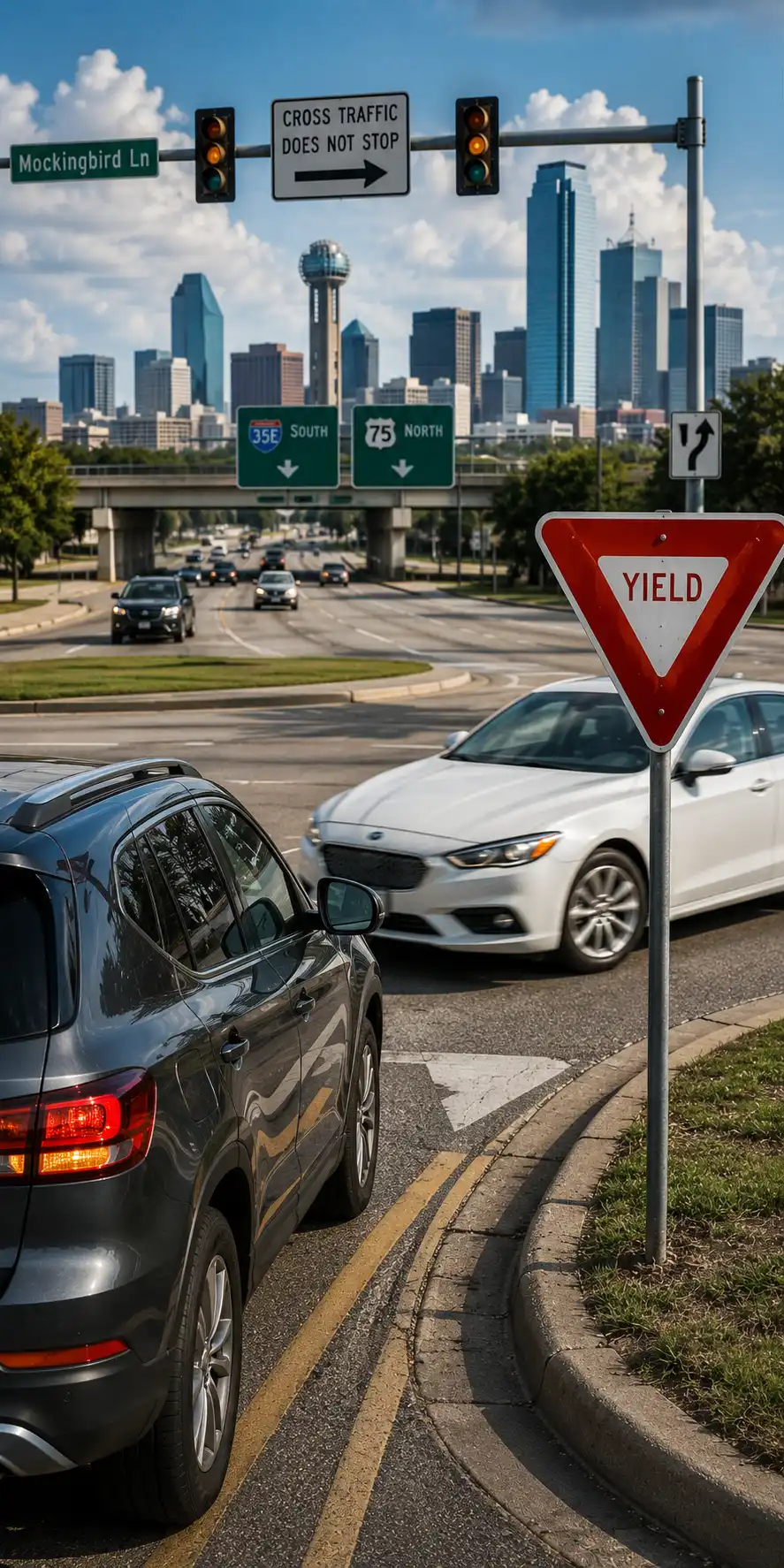
Failure to Yield: The third most common cause, particularly at intersections and on-ramps.
Impaired Driving: Alcohol was confirmed in 6.02% of reported Denver crashes in 2024.
Aggressive Driving: Tailgating, unsafe lane changes, and road rage.
High-Risk Corridors: The most dangerous locations in Denver include I-70 EB at North Peoria Street (103 crashes — the city’s top hotspot), I-25 and Colfax Avenue, I-25 SB at Yale Avenue, and West Alameda Avenue at South Federal Boulevard.
Often caused by following too closely, distracted driving, or sudden stops in traffic. These crashes frequently cause whiplash, neck injuries, and back injuries. The driver who hits from behind is usually at fault.
Among the deadliest types of crashes. Head-on collisions usually result from wrong-way driving, drunk driving, or lane departure. The combined impact force makes these accidents extremely severe.
Also called broadside or side-impact accidents. Common at intersections when drivers run red lights or fail to yield. The lack of a crumple zone on the side of a car makes these collisions extremely dangerous for occupants.
It happens when vehicles traveling parallel make contact. Often caused by unsafe lane changes, merging without checking blind spots, or drifting out of a lane. These crashes can cause drivers to lose control and hit other vehicles or barriers.
A vehicle tips over onto its side or roof. More common in SUVs and top-heavy vehicles. Rollovers can be caused by sharp turns at high speed, tire blowouts, or hitting a curb or pothole. These crashes often result in serious injuries or fatalities.
Chain reaction crashes involving three or more vehicles. Common on Denver highways during heavy traffic or bad weather. Determining fault in pileups requires thorough investigation of how each collision occurred.
When a driver flees the scene without stopping. Hit-and-run is a crime, but it happens frequently in Denver. We help identify responsible parties and explore all recovery options, including your own UM/UIM coverage.
Crashes involving Uber or Lyft drivers. These cases may involve multiple insurance policies depending on whether the driver was logged into the app, waiting for a ride request, or actively transporting a passenger.
While often at low speeds, these accidents can still cause injuries and significant property damage. Common causes include failure to yield, improper backing, and distracted driving in busy parking areas.
Do not accept it without talking to a lawyer first. Insurance companies often make low, fast settlement offers before you know the full extent of your injuries. They hope you will take the money quickly and sign away your rights. Once you settle, you typically cannot go back for more compensation, even if your injuries turn out to be much worse. A lawyer can review the offer and tell you if it is fair or if you should negotiate for more.
You should be very cautious. The insurance adjuster works for the other driver insurance company, and their job is to pay out as little as possible. They may ask questions designed to get you to say something that hurts your claim. You are not legally required to give a recorded statement to the other driver insurance company. We strongly recommend speaking with a lawyer before giving any recorded statements.
This is very common. Some serious injuries like whiplash, concussions, and soft tissue damage may not cause immediate pain. Symptoms can appear days or even weeks later. That is why it is critical to see a doctor as soon as possible after any accident, even if you feel fine. If symptoms develop later, go to the doctor right away and tell them about the accident. Delaying medical treatment can hurt your claim.
Yes, you may still have a claim. A police report is evidence, but it is not the final word on who was at fault. Officers do not always have all the facts when they write the report. We can investigate the accident independently, gather additional evidence like witness statements and surveillance footage, and challenge the police report if it is wrong. Even if you were partially at fault, you may still be able to recover compensation under Colorado comparative fault rule.
Every case is different. Some cases settle in a few months. Others may take a year or more, depending on how serious the injuries are, how clear the evidence is, and whether the insurance company is willing to make a fair offer. We work to move cases forward as quickly as possible, but we will not rush you into a settlement that does not fully compensate you for your losses.
Do not panic. What the other driver says at the scene does not determine fault. Fault is determined based on evidence, including the police report, witness statements, photos, video footage, and sometimes accident reconstruction analysis. Insurance companies and courts look at the facts, not just what someone claims. A lawyer can investigate the accident and build a case showing what really happened.
Yes. Colorado law allows you to recover compensation for both economic damages (like medical bills and lost wages) and non-economic damages (like pain and suffering, mental anguish, and loss of enjoyment of life). The amount depends on how severe your injuries are and how they affect your daily life. Insurance companies often try to minimize or deny these damages, which is why having a lawyer can make a big difference.
You may be able to hold both the driver and their employer responsible. If the driver was working at the time of the accident, their employer may be liable under a legal principle called vicarious liability. This can be important because companies typically carry much larger insurance policies than individual drivers. We investigate who owns the vehicle, whether the driver was on the job, and what commercial vehicle insurance policies may apply.
Even when fault seems obvious, insurance companies will look for ways to reduce what they pay. They may claim you were partly at fault, argue that your injuries are not as serious as you say, or offer a settlement that does not cover your future medical needs. A lawyer can handle the insurance company, negotiate a fair settlement, and make sure your rights are protected while you focus on recovering.
Colorado law requires drivers to carry at least $30,000 per person for bodily injury, $60,000 per accident for bodily injury, and $25,000 for property damage. However, these minimums are often not enough to cover serious injuries. That is why having Uninsured/Underinsured Motorist coverage on your own policy is so important. It protects you if the other driver has no insurance or not enough insurance.