Available 24/7 (214) 333-3333
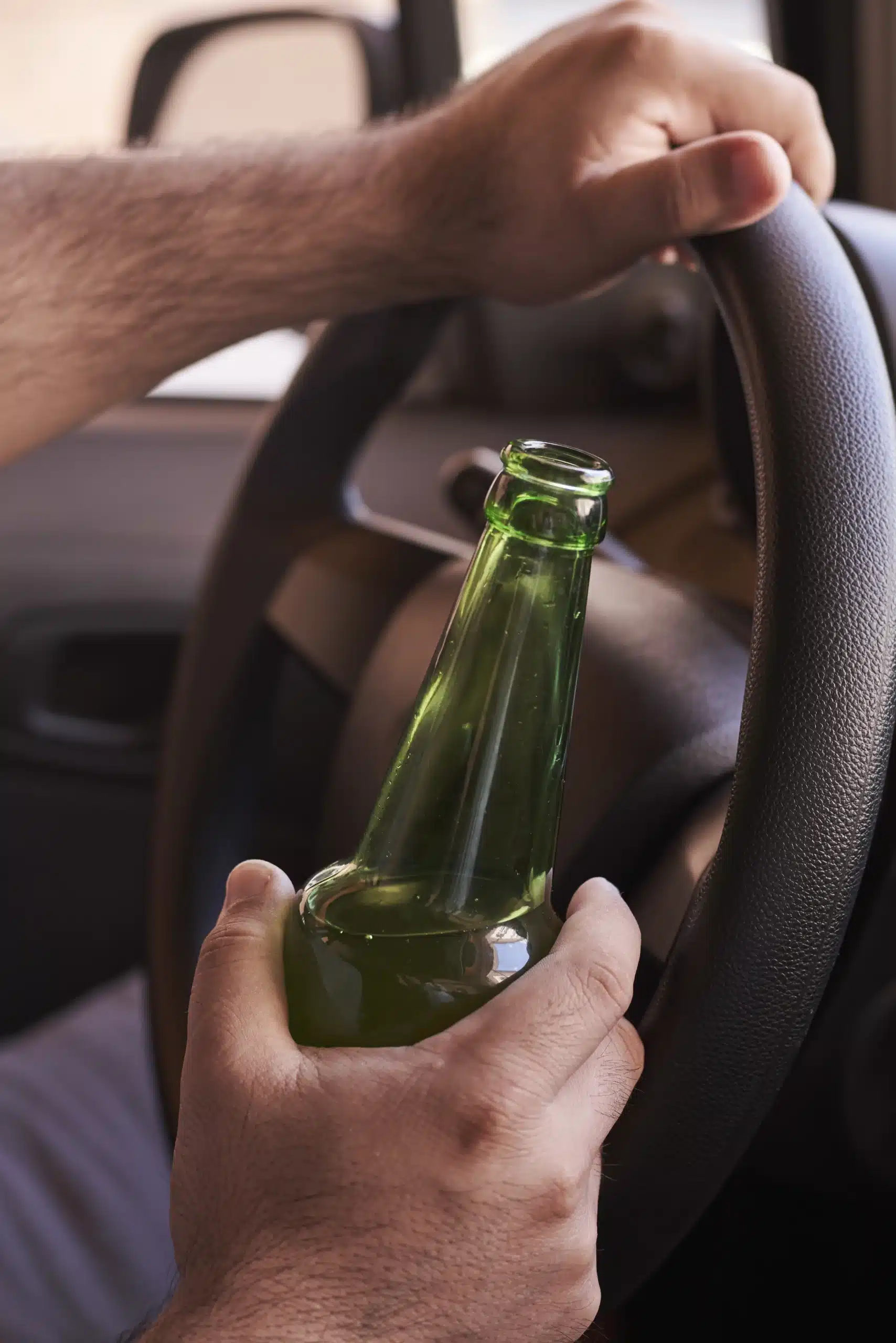
A drunk driving crash is never a random accident. It is a reckless choice that can destroy a life in seconds. If you or someone you love was injured by an intoxicated driver in Denver or the surrounding area, you are likely dealing with physical pain, rising medical bills, and a deep sense of injustice. You should not have to bear the weight of someone else’s reckless decision on your own.
Because these crashes are entirely preventable, they are often the hardest for families to come to terms with. The driver had every opportunity to make a different choice. When they decided to get behind the wheel while impaired, they became responsible for everything that followed.
Colorado law provides a clear path to justice for victims and their families. At Frenkel & Frenkel, our Denver drunk driving accident attorneys fight to hold every responsible party accountable, including the driver and potentially any business that knowingly overserved them. We handle the investigation, the insurance battles, and the legal complexity so you can focus on your recovery.
We offer free consultations and handle Denver drunk driving cases on a contingency fee basis. You pay nothing unless we recover compensation for you.
NO FEES UNLESS WE WIN

1,300+ Five-Star Reviews
$1B+
RECOVERED
30+
DECADES OF COMBINED LEGAL EXPERIENCE
90+
DECADES OF COMBINED LEGAL EXPERIENCE
FREE
CONSULTATION
KEY TAKEAWAYS
Quick Answer
What should I do after a drunk driving accident in Denver?
Seek medical attention right away, even if you feel fine. Call 911 and report the crash to law enforcement. Document the scene if you are able to do so safely. Save all records related to the accident, including your medical visits, receipts, and any communications from insurance companies. Do not give a recorded statement to any insurance company before speaking with an attorney. These steps can help protect both your health and your legal rights.
Call (720) 807-3985 — Free Consultation"*" indicates required fields
Colorado’s Dram Shop Act (C.R.S. 44-3-801) allows injury victims to pursue compensation from licensed alcohol vendors, such as bars, restaurants, and nightclubs, when those businesses willfully and knowingly served alcohol to a patron who was visibly intoxicated or under the age of 21, and that patron later caused a crash.
This matters because impaired drivers often do not carry enough insurance to cover serious injuries. A Dram Shop claim can open a second source of recovery through the business’s commercial policy. These claims rely on time-sensitive evidence: bar surveillance footage is frequently deleted within 30 to 90 days, and point-of-sale records can be overwritten quickly.
One important difference under Colorado law: the statute of limitations for a Dram Shop claim is only one year from the date the alcohol was served, which is much shorter than the three-year window for a standard motor vehicle injury claim. If you wait too long, you could lose the right to pursue the bar or restaurant entirely. Contact Frenkel & Frenkel at (720) 807-3985 as soon as possible.
Colorado law recognizes two levels of impaired driving, which is a distinction that does not exist in Texas.
Driving Under the Influence (DUI) applies when a driver’s BAC is 0.08% or higher, or when alcohol or drugs impair the driver’s ability to operate the vehicle safely, regardless of BAC. This is governed by C.R.S. 42-4-1301.
Driving While Ability Impaired (DWAI) is a Colorado-specific offense that applies when a driver’s BAC is above 0.05% but below 0.08%, or when alcohol or drugs have affected the driver to even the slightest degree. Even a driver below the 0.08% DUI threshold can be found impaired and responsible for your crash.
For commercial drivers, the legal limit is 0.04%. For drivers under 21, a BAC of 0.02% or higher constitutes a violation.
For personal injury claims arising from a motor vehicle accident in Colorado, you generally have three years from the date of the crash to file a lawsuit. This is different from Texas, which gives two years.
However, if you are also pursuing a Dram Shop claim against the bar or restaurant that served the driver, you have only one year from the date the alcohol was served. This deadline is strict and short. Missing it means losing that avenue of recovery entirely.
For wrongful death claims involving a drunk driving crash, the deadline may extend to four years in cases involving vehicular homicide. Because deadlines vary by claim type, consulting an attorney early is critical.
Acting quickly preserves the evidence that wins these cases:
• Bar and restaurant surveillance footage (often deleted within 30 to 90 days)
• Point-of-sale records and tabs showing what was ordered and how much was consumed
• 911 call recordings
• Police dashcam and body camera footage
• Toxicology and blood test results
• Witness statements while memories are fresh
What If the Drunk Driver Has Little or No Insurance?
This is one of the hardest parts of these cases. Many drunk drivers carry only the minimum insurance, and that may not cover your losses. Your own uninsured and underinsured motorist coverage can help fill the gap if you have it. Colorado law requires insurers to offer that coverage, but you can reject it in writing. A Dram Shop claim may also help. A lawyer can review every source of recovery.
Can I Still File a Claim If the Drunk Driver Was Not Charged or Convicted?
Yes. A criminal charge or conviction is not required. The criminal case uses a very high proof standard. A civil claim only requires proof that it is more likely than not that the driver was impaired and caused your injuries. The police report, witness statements, BAC evidence, and the driver’s conduct can all support your claim.
Quick Answer
What evidence can be lost if I wait to hire a drunk driving accident attorney?
Waiting even a few weeks after a drunk driving accident can cost you critical evidence:
Colorado gives you 2 years to file — but the evidence window is much shorter. Contact us today.
Don't Wait — Call (720) 807-3985
If you were injured by a drunk or impaired driver in Denver, you may be eligible to recover:
Economic Damages: Past and future medical bills, lost wages, loss of future earning capacity, vehicle repair or replacement costs, and rehabilitation or therapy expenses.
Non-economic Damages: Pain and suffering, mental anguish, physical impairment, disfigurement, and loss of consortium for a spouse or partner.
Punitive (Exemplary) Damages: Because drunk driving is classified as willful and wanton conduct under Colorado law, a jury may award additional punitive damages to punish the driver and deter similar behavior in the future. These damages go beyond compensation and are intended to send a message.
Note: Dram Shop claims against bars and restaurants are subject to a separate statutory cap. For 2026 and 2027, the maximum damages recoverable from an alcohol vendor under Colorado’s Dram Shop Act is $465,730. This cap does not apply to the claim against the intoxicated driver.
Our attorneys know how to pursue every responsible party, including impaired drivers and the businesses that overserved them.
Our founding attorneys previously represented insurance companies. We know their tactics and we use that knowledge to fight back on your behalf.
We have secured substantial settlements and verdicts for injured clients and their families across multiple states.
We understand how Colorado's DUI and DWAI statutes, Dram Shop rules, and modified comparative fault system affect your claim and your recovery.
Settlement - Catastrophic Injury Case
Verdict - Commercial Vehicle Collision
Settlement - Trucking Accident Case
Settlement - Serious Motor Vehicle Wreck
Knowing why these crashes happen can help show who may be responsible and what evidence matters most.
High BAC or DWAI-level impairment: Even drivers below the 0.08% DUI threshold can be legally impaired under Colorado’s DWAI law and be found responsible for a crash.
Late-night and weekend driving: The risk of encountering an impaired driver rises sharply after 10:00 PM, particularly on Friday and Saturday nights. High-traffic Denver corridors like Colfax Avenue, I-25, and the areas around LoDo and RiNo see concentrated activity during late hours.
Over-service by bars and restaurants: When staff fail to cut off visibly intoxicated customers, they may expose the business to liability under Colorado’s Dram Shop Act.
Drug-impaired driving: Colorado law addresses both alcohol and drug impairment. This includes marijuana, which is legal in Colorado but still illegal to use while driving, as well as prescription medications and illegal substances.
Distracted driving combined with impairment: Alcohol or drug impairment compounded by phone use or other distractions dramatically increases crash risk.
Social host liability for minors: A private host who knowingly provides alcohol to a person under 21 may be held responsible under Colorado law if that minor causes a crash.
The most direct claim is against the drunk driver. We gather the proof needed to show fault and seek full compensation, including punitive damages when the facts support it.
If a bar, restaurant, nightclub, or other licensed business over-served an obviously intoxicated person who later caused a crash, that business may also be at fault under the Colorado Dram Shop Act. Fast action matters because video and records can be lost.
Colorado law can hold adults responsible when they knowingly provide alcohol to a minor or allow a minor to be served on property they own or control, and the minor later causes a crash. If this happened to you or a family member, you may have a claim.
Impairment is not limited to alcohol. A driver impaired by prescription drugs, marijuana, or any other controlled substance can be held at fault for the crash.
If a drunk driving crash takes a life, family members may be able to file a wrongful death claim. That can include funeral costs, loss of financial support, loss of companionship, and grief. No amount of money can replace the loss, but Colorado law gives families a way to hold the responsible parties accountable.
If an Uber or Lyft driver, a delivery driver, or another commercial driver causes a crash while impaired, the claim may involve the driver and the company that employed or contracted them. These cases can be more complex, but they may also open more paths to recovery.
Crashes involving impaired truck drivers and other commercial vehicle operators can result in severe injuries and significant financial losses. These cases often involve commercial insurance coverage, federal and state safety regulations, driver qualification records, and company oversight.
Denver usually gives you two years from the crash date to file a personal injury lawsuit. For wrongful death cases, the two-year period usually starts on the date of death. If you miss the deadline, you will almost always lose your chance to recover money. Contact a lawyer as soon as you can.
Be careful. Insurance adjusters work for the insurance company, not for you. They may ask for a recorded statement soon after the crash, and your words can be used against you. It is smart to talk with a lawyer before you give any statement. Frenkel & Frenkel can handle those calls for you.
Denver uses a modified comparative fault rule. If you were partly at fault, your recovery may be reduced by your share of fault. But if you are not more than 50% responsible, you may still recover damages. In drunk driving cases, strong proof of the driver's impairment often limits blame-shifting.
Yes, often. Under the Denver Dram Shop Act, a licensed business may be liable if it served an obviously intoxicated person who then caused injuries. Helpful evidence can include bar video, receipts, witness accounts, and BAC results. Time matters because video is often erased quickly.
Frenkel & Frenkel offers a free initial consultation with no obligation. We handle drunk driving accident cases on a contingency fee basis, which means you pay no attorney fee unless we recover money for you. There are no upfront costs for our legal help.
Depending on your case, you may be able to recover medical expenses, lost wages, future medical costs, loss of earning capacity, pain and suffering, mental anguish, physical impairment, disfigurement, and property damage. If the driver's conduct was especially reckless, Denver law may also allow punitive damages.
First, get medical care right away, even if you think you are fine. Adrenaline can hide serious injuries, and some symptoms show up later. Call 911 so a police report is made. Get witness names and contact information. Do not admit fault or apologize. If you can, take photos of the vehicles, your injuries, and the scene. Contact a Colorado drunk driving accident lawyer as soon as possible to protect your rights and preserve evidence.