

Understanding the Critical Legal Distinctions That Impact Your Case
Have you ever wondered about the legal differences between car vs. truck accidents and why these distinctions could dramatically affect your compensation? If you’ve been involved in an accident with a commercial truck, you might assume the legal process is similar to a typical car accident. At Frenkel & Frenkel, we believe in transparency and empowerment, and the truth is that truck accident cases involve significantly more complex legal considerations that can make or break your claim.
The legal landscape surrounding car vs. truck accidents is vastly different, with truck accidents involving federal regulations, multiple potentially liable parties, and significantly higher insurance coverage limits. These differences aren’t just technical details—they represent opportunities for substantially greater compensation and protection of your rights that many accident victims never realize exist.
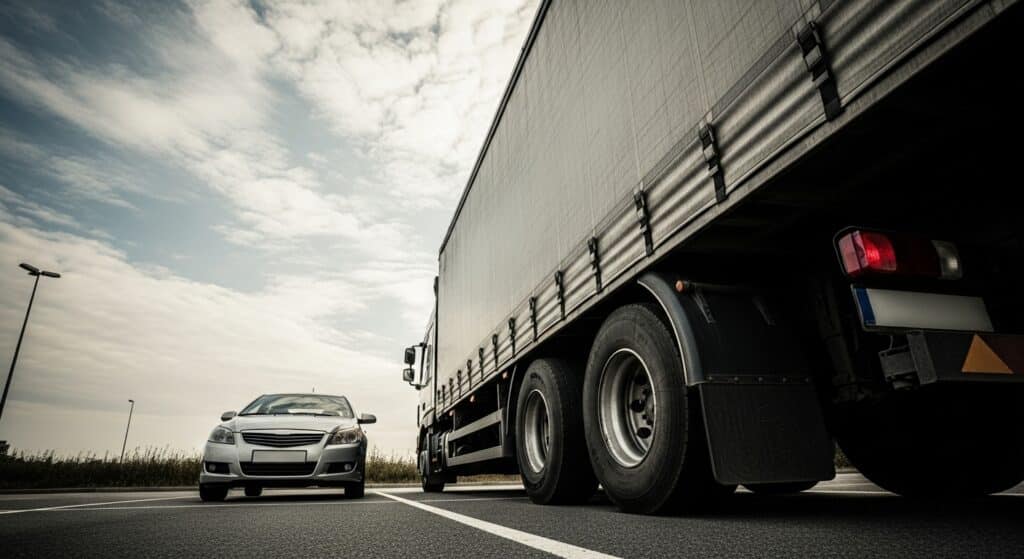
Understanding these legal distinctions is crucial because truck accidents typically result in more severe injuries and damages due to the massive size and weight difference between commercial trucks and passenger vehicles. A fully loaded commercial truck can weigh up to 80,000 pounds, compared to the average passenger car’s 3,000 pounds. This dramatic difference in mass creates not only more devastating physical consequences but also more complex legal scenarios that require specialized knowledge and experience.
Key Takeaways
-Truck accidents involve federal regulations and oversight that don’t apply to regular car accidents
-Multiple parties may be liable in truck accidents, including drivers, trucking companies, and manufacturers
-Commercial trucks carry much higher insurance coverage limits, potentially meaning greater compensation
-Truck accident cases require specialized investigation techniques and expert testimony
The Regulatory Framework: Federal vs. State Oversight
Federal Motor Carrier Safety Administration (FMCSA) Regulations
The most significant legal difference between car vs. truck accidents lies in the regulatory framework governing commercial trucking. While passenger vehicles are primarily regulated by state laws, commercial trucks must comply with extensive federal regulations enforced by the Federal Motor Carrier Safety Administration (FMCSA).
These federal regulations cover every aspect of commercial trucking operations, from driver qualifications and training requirements to vehicle maintenance standards and hours of service limitations. Truck drivers must obtain Commercial Driver’s Licenses (CDLs), undergo regular medical examinations, and comply with strict limits on how many hours they can drive without rest periods.
The FMCSA regulations also require detailed record-keeping that doesn’t exist in regular car accident cases. Trucking companies must maintain driver logs, vehicle inspection records, maintenance schedules, and training documentation. These records can provide crucial evidence in truck accident cases, but they require specialized knowledge to obtain and interpret effectively.
Violations of FMCSA regulations can establish negligence per se in truck accident cases, meaning that regulatory violations automatically constitute legal negligence. This is a powerful legal tool that doesn’t exist in typical car accident cases, where negligence must be proven through other means.
Hours of Service Violations
One of the most common and significant regulatory violations in truck accidents involves hours of service (HOS) rules. These federal regulations limit how long truck drivers can operate their vehicles without mandatory rest periods, but they don’t apply to regular passenger vehicle drivers.
Current HOS regulations generally limit truck drivers to 11 hours of driving time within a 14-hour work period, followed by mandatory 10-hour rest periods. Drivers must also take 30-minute breaks after eight hours of driving. Violations of these rules can indicate driver fatigue, which is a leading cause of serious truck accidents.
Electronic Logging Devices (ELDs) are now required in most commercial trucks to automatically track compliance with HOS regulations. These devices provide objective evidence of potential violations that can be crucial in establishing liability in truck accident cases.
Vehicle Standards and Inspection Requirements
Commercial trucks are subject to much more stringent vehicle standards and inspection requirements than passenger cars. The FMCSA requires regular safety inspections, maintenance schedules, and detailed documentation of all vehicle maintenance and repairs.
These requirements create additional opportunities to establish liability in truck accident cases. If an accident was caused by mechanical failure, brake problems, or other vehicle defects, the trucking company’s failure to properly maintain the vehicle or comply with inspection requirements can establish negligence.
Multiple Liability: The Complex Web of Responsibility
Trucking Company Liability
Unlike typical car accidents where liability usually rests with individual drivers, truck accidents often involve multiple potentially liable parties. The trucking company that employs the driver or owns the vehicle may be liable under several legal theories that don’t apply to regular car accidents.
Respondeat superior is a legal doctrine that makes employers liable for their employees’ actions performed within the scope of employment. This means that trucking companies can be held responsible for their drivers’ negligent actions, even if the company itself did nothing wrong.
Trucking companies may also be directly liable for their own negligent actions, such as inadequate driver training, failure to conduct proper background checks, pressuring drivers to violate safety regulations, or failing to maintain vehicles properly. These forms of direct liability can result in significant additional compensation beyond what would be available in a typical car accident case.
Owner-Operator Relationships
Many commercial trucks are operated under complex owner-operator arrangements where the driver owns the truck but works under contract with a trucking company. These relationships can create complicated liability scenarios that require careful legal analysis to identify all potentially responsible parties.
In some cases, both the owner-operator and the trucking company may be liable for an accident. The trucking company might be responsible for inadequate oversight, unrealistic delivery schedules, or pressure to violate safety regulations, while the owner-operator might be liable for vehicle maintenance failures or driving violations.
Cargo Loading and Third-Party Liability
Truck accidents can also involve liability for parties responsible for loading cargo. Improperly loaded, overweight, or unsecured cargo can cause accidents through shifting loads, trailer rollovers, or cargo spills. The companies responsible for loading the truck may be liable for accidents caused by their negligent cargo handling.
Manufacturers of truck components, trailer manufacturers, and maintenance companies may also be liable if defective parts or inadequate maintenance contributed to an accident. These additional sources of liability don’t typically exist in regular car accident cases.
| Liability Source | Car Accidents | Truck Accidents | Potential Impact |
| Driver Negligence | Primary source | One of many sources | Similar |
| Employer Liability | Rarely applicable | Often significant | Major increase |
| Regulatory Violations | Limited | Extensive federal rules | Substantial advantage |
| Vehicle Defects | Manufacturer only | Multiple parties | Expanded options |
| Maintenance Issues | Owner responsibility | Company/contractor liability | Additional recovery |
Insurance Coverage: Dramatically Different Limits

Federal Minimum Insurance Requirements
One of the most significant practical differences between car vs. truck accidents involves insurance coverage limits. While most states require only modest minimum insurance coverage for passenger vehicles (often $25,000 to $50,000), federal law requires much higher minimum coverage for commercial trucks.
The FMCSA requires minimum insurance coverage of $750,000 for most commercial trucks, with higher requirements for trucks carrying hazardous materials or operating in certain circumstances. Many trucking companies carry coverage well above these minimums, often reaching $1 million or more per accident.
These higher insurance limits mean that truck accident victims have access to significantly more compensation than would be available in typical car accidents. However, accessing this coverage often requires understanding complex insurance arrangements and dealing with sophisticated insurance companies that employ aggressive tactics to minimize payouts.
Umbrella and Excess Coverage
Many trucking companies carry umbrella or excess insurance policies that provide additional coverage beyond their primary policies. These additional layers of coverage can provide millions of dollars in additional compensation for seriously injured victims.
Identifying and accessing these additional insurance sources requires specialized knowledge of commercial insurance practices and careful investigation of the trucking company’s insurance arrangements. Many accident victims never realize these additional sources of compensation exist.
Self-Insurance and Captive Insurance Companies
Some large trucking companies are self-insured or use captive insurance companies to provide coverage. These arrangements can create additional complexity in truck accident cases but may also provide access to greater compensation than would be available through traditional insurance policies.
Understanding these complex insurance arrangements and how to effectively pursue claims against self-insured entities requires specialized experience that most attorneys handling regular car accident cases don’t possess.
How Frenkel & Frenkel Handles Complex Truck Accident Cases
Specialized Investigation Techniques
At Frenkel & Frenkel, we understand that the legal differences between car vs. truck accidents require specialized investigation techniques and expertise. Our experienced attorneys immediately implement comprehensive investigation protocols designed specifically for truck accident cases.
Our investigation process includes obtaining and analyzing Electronic Control Module (ECM) data from the truck’s computer systems, which can provide crucial information about the truck’s speed, braking, and other operational data at the time of the accident. We also secure driver logs, maintenance records, and company safety records that are unique to truck accident cases.
We work with accident reconstruction experts who specialize in commercial vehicle accidents and understand the unique dynamics involved when massive trucks collide with smaller passenger vehicles. These experts can analyze factors like stopping distances, rollover dynamics, and cargo shift that don’t typically apply to car-on-car accidents.
Federal Regulation Expertise
Our team has extensive experience with FMCSA regulations and how violations of these rules can be used to establish liability in truck accident cases. We know how to identify regulatory violations that may not be obvious to attorneys who primarily handle regular car accident cases.
We also understand how to use regulatory violations to establish negligence per se, which can significantly strengthen our clients’ cases and improve settlement negotiations. Insurance companies know that regulatory violations create powerful evidence of negligence that can be difficult to defend against at trial.
Multi-Party Litigation Management
Truck accident cases often involve multiple defendants with different insurance companies and legal teams. Managing these complex multi-party cases requires specialized experience and strategic thinking to ensure that all potentially liable parties are identified and held accountable.
We have extensive experience coordinating discovery, managing multiple insurance companies, and developing litigation strategies that maximize recovery from all available sources. Our approach ensures that our clients don’t miss opportunities for compensation that might be overlooked in less complex car accident cases.
The Investigation Process: Why Time Is Critical
Preserving Electronic Evidence
Modern commercial trucks are equipped with sophisticated electronic systems that record crucial data about the vehicle’s operation. This Electronic Control Module (ECM) data can provide objective evidence about the truck’s speed, braking, engine performance, and other factors at the time of an accident.
However, this electronic data is often automatically overwritten after a certain period, making immediate action crucial to preserve this evidence. We immediately send preservation letters to trucking companies and their insurance carriers to prevent the destruction of this crucial evidence.
The investigation of truck accidents also requires preserving driver logs, maintenance records, training files, and company safety records that may be routinely destroyed in the normal course of business. Quick action is essential to ensure this evidence is preserved for use in litigation.
Accident Scene Documentation
Truck accident scenes often present unique challenges and opportunities for evidence gathering. The massive size of commercial trucks can create complex accident dynamics that require specialized documentation and analysis.
We work with investigators who understand how to document truck accident scenes, including measuring skid marks from multiple axles, analyzing cargo distribution, and documenting road conditions that may have contributed to the accident. This specialized documentation is crucial for effective accident reconstruction.
Witness Interviews and Expert Analysis
Truck accidents often involve multiple witnesses with different perspectives on the accident sequence. Professional truck drivers, other motorists, and pedestrians may all have observed different aspects of the accident that are crucial for establishing liability.
We conduct thorough witness interviews and work with experts who can analyze witness statements in the context of truck accident dynamics. This analysis often reveals important details about regulatory violations, driver behavior, or vehicle defects that contributed to the accident.
Damages: Why Truck Accidents Often Result in Higher Compensation
Severity of Injuries
The massive size and weight difference between commercial trucks and passenger vehicles typically results in more severe injuries in truck accidents. These severe injuries often require extensive medical treatment, long-term rehabilitation, and result in permanent disabilities that don’t occur as frequently in car-on-car accidents.
The higher insurance coverage limits available in truck accident cases mean that victims can receive full compensation for these severe injuries, including future medical expenses, lost earning capacity, and pain and suffering damages that might exceed the coverage limits in typical car accident cases.
Economic Impact Analysis
Truck accident cases often require sophisticated economic analysis to properly calculate the full extent of damages. Severe injuries can impact victims’ ability to work for extended periods or permanently, requiring detailed analysis of lost earning capacity and future financial needs.
We work with economic experts who specialize in calculating these complex damages and can present compelling evidence of the full financial impact of truck accident injuries. This expertise often results in significantly higher compensation than would be available in typical car accident cases.
Punitive Damages Potential
In cases involving egregious regulatory violations or reckless conduct by trucking companies, punitive damages may be available. These damages are designed to punish wrongdoers and deter similar conduct, and they can significantly increase the total compensation available to victims.
Punitive damages are more commonly available in truck accident cases than in regular car accidents because of the extensive regulatory framework governing commercial trucking and the potential for corporate misconduct by trucking companies.
| Damage Category | Car Accidents | Truck Accidents | Key Differences |
| Medical Expenses | Often moderate | Frequently severe | Higher coverage limits |
| Lost Wages | Limited by coverage | Better compensation | Higher insurance limits |
| Pain and Suffering | Coverage limited | More comprehensive | Greater available funds |
| Future Damages | Often inadequate | Properly compensated | Sophisticated analysis |
| Punitive Damages | Rarely available | More common | Regulatory violations |
Common Misconceptions About Truck Accident Cases
“It’s Just Like a Car Accident”
One of the most dangerous misconceptions about truck accidents is that they’re handled just like regular car accidents. This misconception can cost victims hundreds of thousands of dollars in compensation and result in inadequate protection of their legal rights.
The complex regulatory framework, multiple liability sources, and higher insurance coverage limits in truck accident cases require specialized knowledge and experience that most attorneys handling regular car accident cases don’t possess. Treating a truck accident like a regular car accident almost guarantees that victims won’t receive the compensation they deserve.
“The Insurance Company Will Handle Everything”
Trucking company insurance carriers are sophisticated entities with teams of experienced adjusters, investigators, and attorneys whose job is to minimize payouts. They often move quickly after truck accidents to secure statements and settlements before victims understand the full extent of their injuries or the complexity of their cases.
These insurance companies know that truck accident cases can result in much higher payouts than regular car accidents, making them even more motivated to settle cases quickly and cheaply. Victims who rely on insurance companies to “handle everything” almost always receive inadequate compensation.
“I Don’t Need a Lawyer Right Away”
The complex evidence preservation requirements and tight deadlines in truck accident cases make immediate legal representation crucial. Electronic data can be lost, witnesses can disappear, and crucial evidence can be destroyed if immediate action isn’t taken to preserve it.
The sophisticated tactics used by trucking company insurance carriers also make early legal representation essential. These companies often have investigators and attorneys working on cases within hours of accidents, giving them significant advantages over unrepresented victims.
Taking Action: Protecting Your Rights After a Truck Accident
Immediate Steps After a Truck Accident
If you’ve been involved in a truck accident, immediate action is crucial to protect your rights and preserve evidence. Seek medical attention immediately, even if you don’t think you’re seriously injured, as some truck accident injuries may not be immediately apparent.
Document the accident scene if possible, including photos of all vehicles, the truck’s license plate and DOT number, and any visible damage. Get contact information for all witnesses and the truck driver’s commercial driver’s license information.
Most importantly, contact an experienced truck accident attorney immediately. The complex evidence preservation requirements and sophisticated tactics used by trucking company insurance carriers make early legal representation essential for protecting your rights.
Why Specialized Legal Representation Matters
Truck accident cases require specialized knowledge of federal regulations, complex insurance arrangements, and sophisticated investigation techniques that most attorneys don’t possess. The legal differences between car vs. truck accidents are so significant that using an attorney who primarily handles regular car accidents can seriously compromise your case.
At Frenkel & Frenkel, we have extensive experience with the unique legal challenges presented by truck accident cases. Our specialized knowledge and resources allow us to identify all potentially liable parties, access all available insurance coverage, and build compelling cases that result in maximum compensation for our clients.
The investment in specialized legal representation typically pays for itself many times over through increased settlement amounts and protection from the sophisticated tactics used by trucking company insurance carriers.
Knowledge and Experience Make the Difference
Understanding the legal differences between car vs. truck accidents is crucial for protecting your rights and securing fair compensation after a truck accident. These differences aren’t just technical details—they represent opportunities for substantially greater compensation and protection that many accident victims never realize exist.
At Frenkel & Frenkel, we’ve seen countless cases where victims treated truck accidents like regular car accidents and received inadequate compensation as a result. The complex regulatory framework, multiple liability sources, and higher insurance coverage limits in truck accident cases require specialized knowledge and experience to navigate effectively.
The key to success in truck accident cases is understanding that these cases are fundamentally different from regular car accidents and require specialized legal representation from the very beginning. The sophisticated tactics used by trucking company insurance carriers and the complex evidence preservation requirements make immediate action essential.
Don’t let the complexity of truck accident law work against you. If you’ve been involved in a truck accident, contact Frenkel & Frenkel immediately for your free consultation. Call us at (214) 333-3333 in Dallas or (817) 333-3333 in Fort Worth. We have the specialized knowledge and experience necessary to handle complex truck accident cases and fight for the compensation you deserve.
Your case is too important to leave to chance. Let our experienced team help you understand the legal differences that matter and build the strongest possible case for your recovery.
Frequently Asked Questions
Q: What are the main legal differences between car vs. truck accidents?
A: Truck accidents involve federal regulations, multiple potentially liable parties, higher insurance coverage limits, and more complex investigation requirements than regular car accidents.
Q: Why do truck accidents often result in higher compensation?
A: Commercial trucks are required to carry much higher insurance coverage limits, and multiple parties may be liable, creating more sources of compensation than typical car accidents.
Q: How long do I have to file a truck accident lawsuit?
A: While the statute of limitations is generally the same as car accidents, the complex evidence preservation requirements make immediate legal action crucial in truck accident cases.
Q: Can the trucking company be liable even if the driver caused the accident?
A: Yes, trucking companies can be liable under the respondeat superior doctrine and for their own negligent actions like inadequate training or maintenance failures.
Q: What federal regulations apply to truck accidents?
A: FMCSA regulations cover driver qualifications, hours of service, vehicle maintenance, and safety requirements that don’t apply to regular passenger vehicles.
Q: Do I need a lawyer who specializes in truck accidents?
A: Yes, the complex legal differences between car and truck accidents require specialized knowledge and experience that most general practice attorneys don’t possess.
Created on 02-23-26